Keep it wonderfully simple.
Set out a bowl of in-shell pistachios and a little dish for the shells. Compare unsalted and roasted varieties, or add kernels to a homemade snack mix.
Next celebration: Friday, February 26, 2027
Little green kernels. Big possibilities. Celebrate the pistachio with something sweet, something savory, or simply a handful shared with good company.
Let’s get cracking Meet the little green nut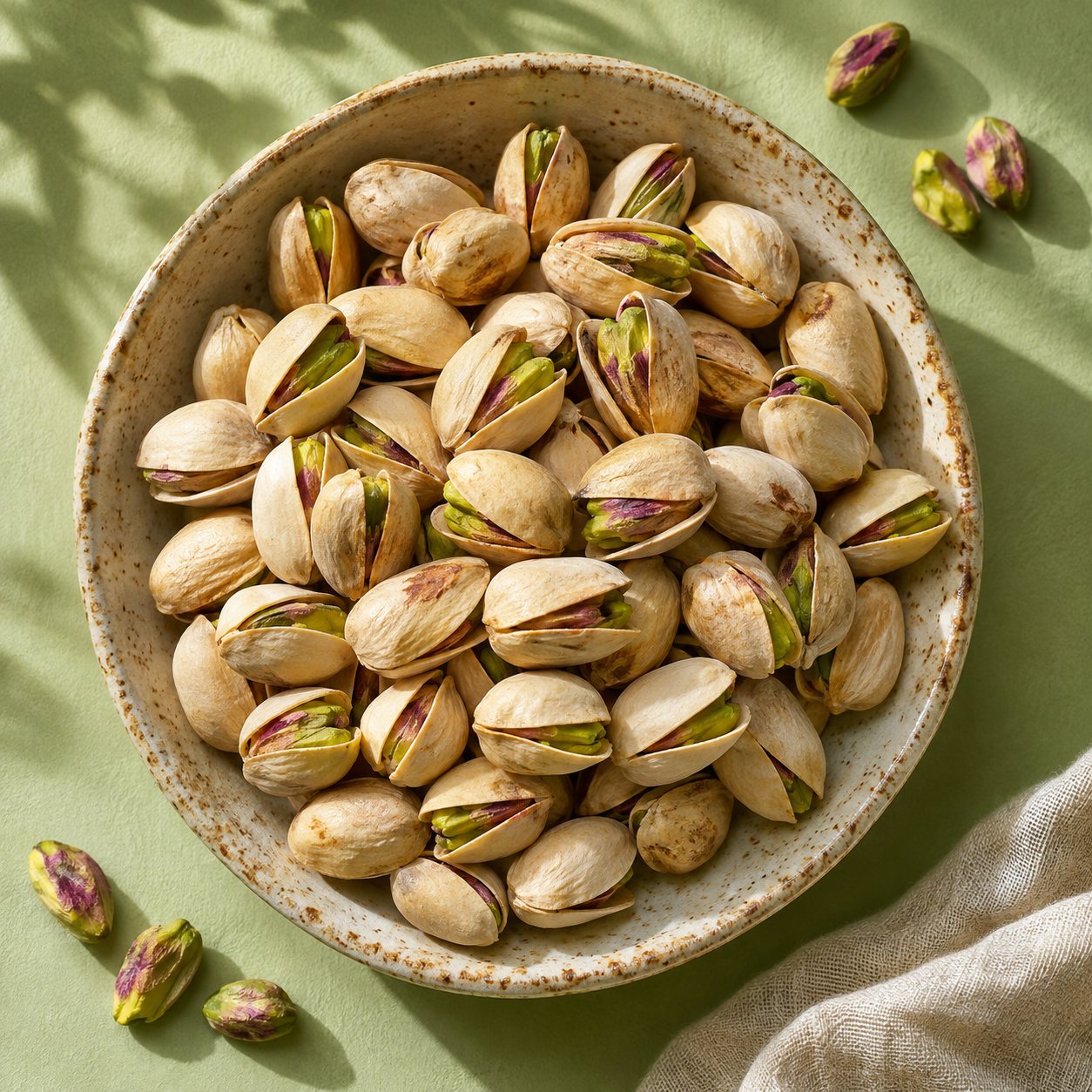
Pistachio still life · AI-generated illustration
World Pistachio Day is celebrated every year on February 26. The next celebration falls on Friday, February 26, 2027. The date is also widely known as National Pistachio Day.
It’s a simple invitation to appreciate pistachios: where they come from, how they grow, and all the delicious ways to enjoy them. You might bake a favorite dessert, try a new savory dish, or pass around a bowl of roasted nuts.
This is an independent guide to the celebration, rather than an official event organiser. There’s no single way to take part—and plenty of reasons to keep enjoying pistachios long after February 26.
Start with a handful. See where it takes you. These easy ideas work for a quiet snack, a family kitchen, or a table full of friends.
Set out a bowl of in-shell pistachios and a little dish for the shells. Compare unsalted and roasted varieties, or add kernels to a homemade snack mix.
Fold chopped pistachios into cookie dough, scatter them over a salad, or finish a bowl of ice cream with a little crunch. Small additions can make a familiar dish feel special.
Bring pistachio cookies to a gathering or cook a meal together. If you share a dish, let people know it contains tree nuts and check for food allergies first.
Pistachios are the edible seeds of Pistacia vera, a tree with roots in western Asia. Usually called tree nuts in the kitchen, they are known for their green kernels, delicate flavor, and naturally pale shells.
The pistachio belongs to the same botanical family as cashews and mangoes. Its distinctive color and texture make it a favorite in both sweet and savory cooking—from ice cream, nougat, and baklava to rice dishes, salads, and sauces.
Pistachios grow in clusters on trees suited to hot, dry summers. Male trees supply pollen carried by the wind to female trees, which produce the crop. As many pistachios ripen, the growing kernel causes the hard shell to split.
The nuts are harvested, their outer hulls are removed, and they are dried before further sorting or processing. Some are sold in their shells; others are shelled for snacking, baking, or cooking.
Approximate amounts per 1 oz (28 g) serving of roasted pistachio kernels. Check your pack’s label for the particular product.
Pistachios provide plant protein, fiber, and a range of vitamins and minerals. A serving of about 49 kernels contains roughly 6 grams of protein and 3 grams of fiber, according to American Pistachio Growers.
They can add texture and variety to a balanced diet. Plain nuts, salted snacks, sweetened spreads, and pistachio desserts have different ingredient lists and nutrition profiles, so compare labels rather than treating them as interchangeable.
For cooking, shelled unsalted kernels make it easier to control seasoning. For snacking, choose the preparation you enjoy and use the serving information on the pack as a guide.
Allergy note: Pistachios are tree nuts. Check ingredients and cross-contact information when preparing food for someone with an allergy.
A little inspiration for February 26—and the other 364 days.
Top yogurt, porridge, or overnight oats with chopped pistachios and fruit. Add them just before serving to keep their texture.
Scatter kernels over roasted vegetables, rice, or a citrus salad. Try replacing some of the nuts in your usual pesto with pistachios.
Use chopped pistachios in cookies, biscotti, or a cake topping. Pair them with chocolate or citrus, or keep their flavor front and center.
Finish ice cream with a handful of chopped kernels, try pistachio gelato, or discover pastries such as pistachio baklava. These are serving ideas rather than tested recipes.
A little nut. A world of possibilities.
Crack · Create · CelebratePistachios have been cultivated and enjoyed in the Middle East for thousands of years. Trade helped carry them into Mediterranean food traditions and, eventually, kitchens around the world.
Their long story includes royal legends, journeys along trading routes, and a place in sweets and celebratory dishes. Stories about the Queen of Sheba are part of pistachio folklore, rather than a documented origin for World Pistachio Day.
In the United States, California’s commercial pistachio industry developed during the twentieth century. Its first commercial crop was harvested in 1976. California remains the center of U.S. production, with other growing regions including Arizona and New Mexico.
Today’s celebration is a chance to connect that history with everyday enjoyment: the slow pleasure of opening a shell, the color of a handful of kernels, and the dishes that make them your own.
World Pistachio Day is Friday, February 26, 2027. It is celebrated on February 26 every year, so the weekday changes.
Yes. February 26 is commonly called both National Pistachio Day and World Pistachio Day. Both names celebrate the same little green favorite.
We have not verified a single founder or founding year for the celebration. The long history of pistachios should not be confused with the history of the modern food holiday.
The part we eat is the seed inside the fruit of the pistachio tree. In cooking and food-allergy labeling, pistachios are treated as tree nuts.
Keep pistachios in a tightly closed container away from heat, moisture, and direct light. Follow the storage and best-before instructions on the pack; refrigeration can be useful for longer storage.
Try pistachio cookies, a crunchy salad topping, pesto, or a garnish for rice and roasted vegetables. For something simple, sprinkle chopped kernels over yogurt or ice cream.
Updated November 4, 2026. Further reading: pistachio history, growing and harvesting, and serving and nutrition information from American Pistachio Growers.